Diagnostic Challenges in SLE and the Promise of Emerging Immunological Biomarkers
 DOI:
DOI:
https://doi.org/10.33974/cvsamg65
Keywords:
Systemic lupus erythematosus, Antinuclear antibodies , Disease activity biomarkers, Transcriptomics, Proteomics, Biomarker discoveryAbstract
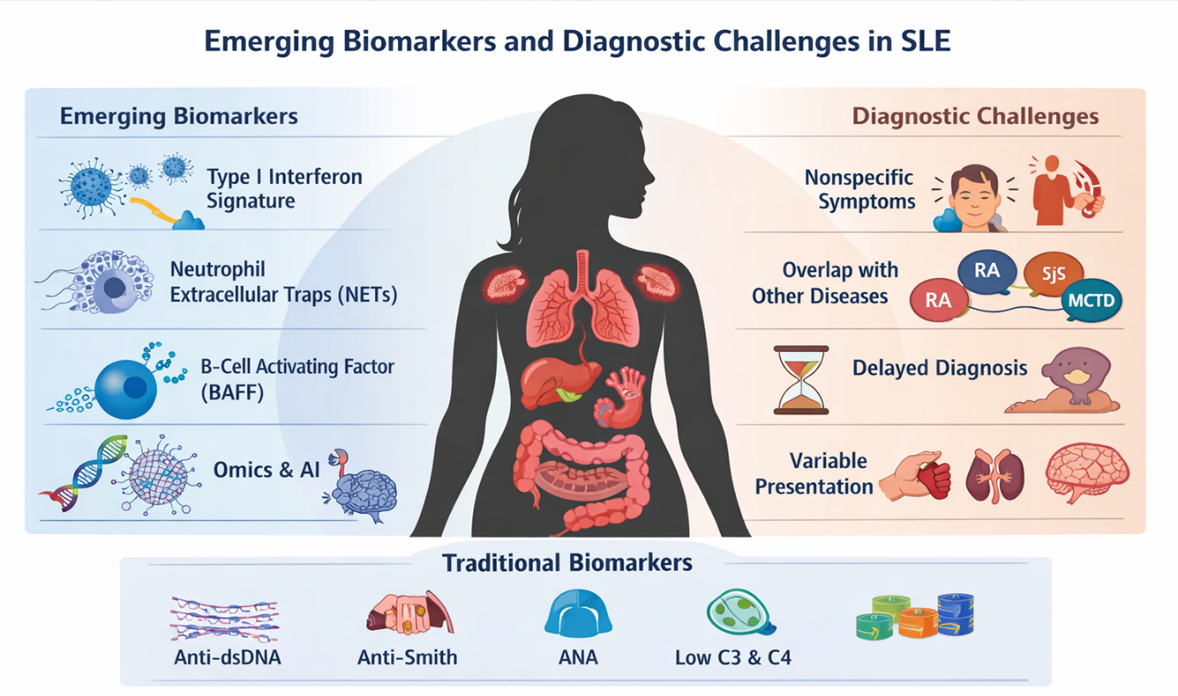
Systemic Lupus Erythematosus (SLE) is a multifaceted systemic autoimmune disease, which presents with variable clinical features and big diagnostic problems. Diagnosis at an early stage has continued to be a challenge because of conflicting clinical manifestations with other autoimmune disorders, unstable clinical manifestations, and poor sensitivity and specificity of traditional biomarkers. Conventional diagnostic characteristics like antinuclear antibodies (ANA), anti-dsDNA, anti-Smith antibodies, and complement are still necessary, though inadequate, in the correct early diagnosis and monitoring of the disease. New biomarkers such as type I interferon signatures, neutrophil extracellular traps (NETs), and B-cell activating factor (BAFF) have been identified in recent developments in immunology and provide some hopeful insights into the pathogenesis of the disease and may help to diagnose it better. Moreover, omics technologies and artificial intelligence-driven methods of analysis are also driving biomarker discovery and precision medicine plans faster. Although these improvements have occurred, the majority of the new biomarkers are yet to undergo large multicenter studies to be validated before they can be used in routine clinical practice. This review pays attention to the diagnostic problems in SLE and explains how new immunological biomarkers may be used to enhance diagnostic quality in the early phase of the disease and its monitoring as well as tailored therapeutic interventions.
Downloads
Downloads

Published
Issue
Section
License
Copyright (c) 2026 Nepolean R, Ramesh K, Kalaivani R, Chandramohan K, Aishwar JP, Mohamed Vahith S (Author)

This work is licensed under a Creative Commons Attribution 4.0 International License.
License Terms
This is an open-access article published in the International Journal of Research in Pharmaceutical Sciences and Technology (IJRPST) by Rubatosis Publications.
It is distributed under the terms of the Creative Commons Attribution 4.0 International License (CC BY 4.0), which permits unrestricted use, distribution, reproduction, and adaptation in any medium or format, provided the original author(s) and source are appropriately credited, a link to the license is provided, and any changes made are indicated.
To view a copy of this license, visit: https://creativecommons.org/licenses/by/4.0/
For any further queries or permissions beyond the scope of this license, please contact: editor@rubatosis.org